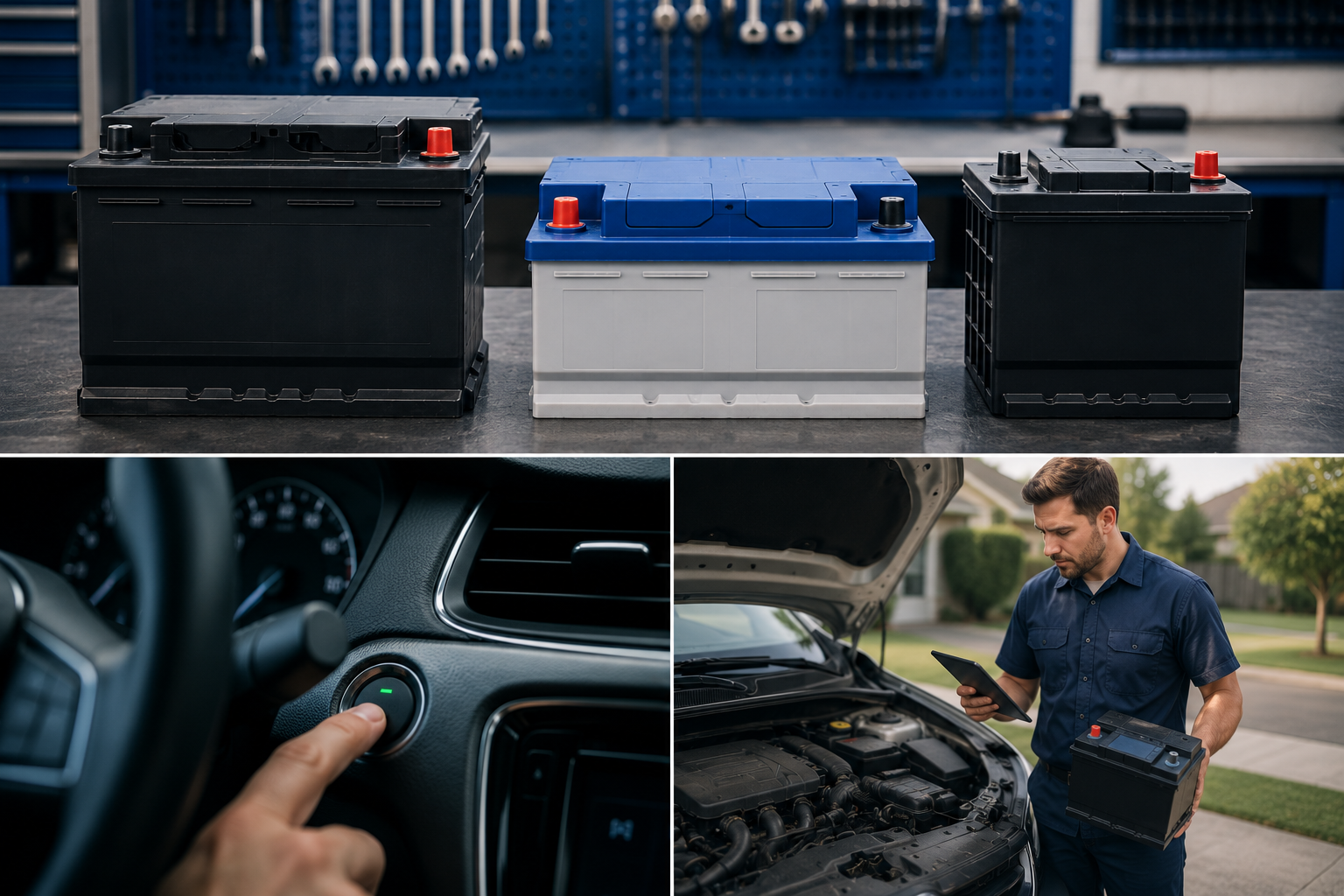
Walk into any battery shop and you’ll see rows of options — AGM, EFB, conventional, maintenance-free, start-stop. It’s easy to assume “a battery is a battery,” but fitting the wrong type can lead to poor performance, a shortened lifespan, or even damage to your car’s electrical system. Here’s what each type actually means, and how to know which one your vehicle needs.
Conventional (Flooded) Batteries
This is the traditional car battery most people grew up with — a lead-acid battery with liquid electrolyte inside. Conventional batteries are:
- Reliable for standard vehicles without start-stop technology
- More affordable than AGM or EFB options
- Best suited to older cars or simpler electrical systems
If your car doesn’t have a start-stop system (the feature that automatically switches the engine off at traffic lights) and you’re not running a lot of extra electronics, a conventional battery is usually enough.
EFB (Enhanced Flooded Battery)
EFB batteries are a step up from conventional batteries, designed specifically to handle more frequent starting cycles. They’re commonly fitted to:
- Entry-level start-stop vehicles
- Cars with moderate electrical demands (basic infotainment, standard accessories)
EFBs offer better cycling durability than conventional batteries at a lower cost than AGM, making them a popular middle-ground choice for many modern hatchbacks and sedans.
AGM (Absorbent Glass Mat) Batteries
AGM batteries use glass mat separators that absorb the electrolyte rather than leaving it as free liquid. This makes them:
- Vibration-resistant and more durable
- Capable of handling high electrical loads (heated seats, advanced safety systems, premium sound systems)
- The standard choice for vehicles with advanced start-stop systems and regenerative braking
If your car came from the factory with an AGM battery, it should generally be replaced with another AGM — swapping to a conventional or EFB battery can shorten its life and, in some cases, trigger dashboard warnings.
How to Know Which One Your Car Needs
The safest way to confirm your battery type is to check one of the following:
- The label on your current battery — most batteries clearly state AGM, EFB, or conventional.
- Your owner’s manual — manufacturers specify the required battery type.
- Whether your car has start-stop technology — if it does, it almost certainly needs an EFB or AGM battery, not a conventional one.
- Ask a technician — a quick VIN or model check can confirm the exact spec for your make and model.
What Happens If You Fit the Wrong Battery?
Fitting a conventional battery to a car designed for AGM can lead to:
- Reduced battery lifespan (sometimes by half or more)
- Start-stop functionality disabling itself
- Dashboard warning lights and reduced alternator efficiency
It’s a common mistake, especially with budget replacements, so it’s worth double-checking before you buy — or letting a technician confirm the right fit for you.
Get the Right Battery, Fitted On the Spot
At Battery Now NSW, our technicians carry a full range of conventional, EFB, and AGM batteries and will confirm the correct spec for your exact make and model before installing anything. No guesswork, no upselling — just the right battery for your car.
Not sure what your car needs? 📞 Call 0472 727 171 and we’ll confirm the right battery and have it fitted at your home or workplace within 30–60 minutes.